
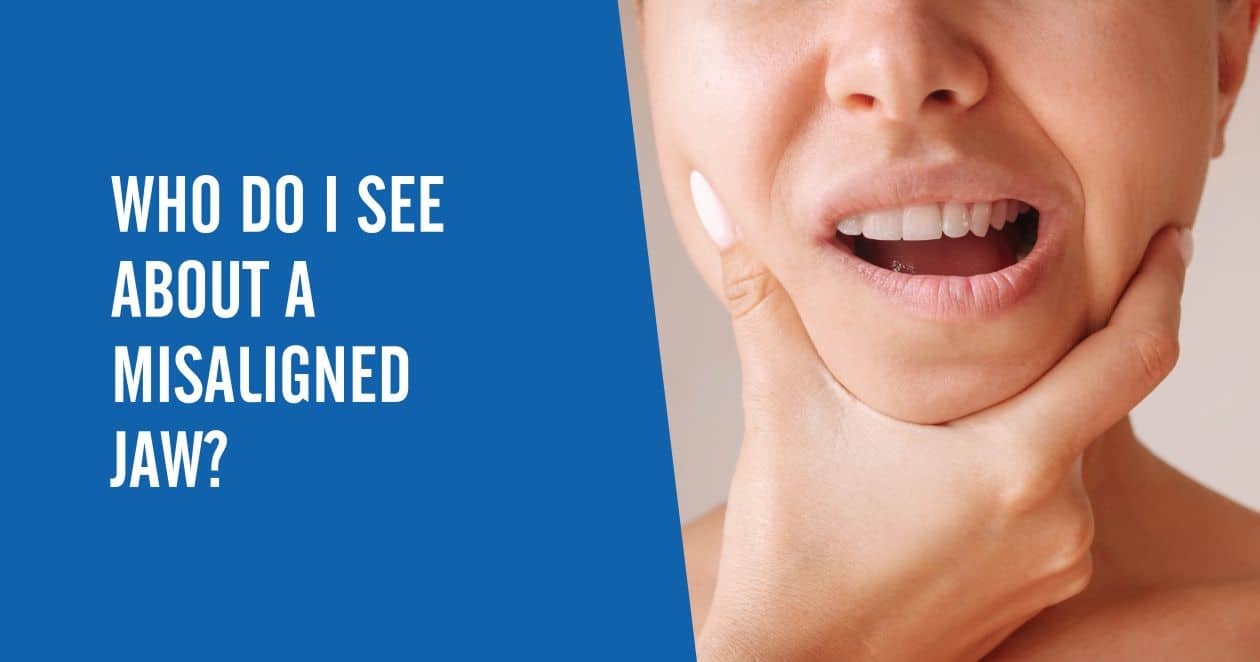
Maybe your jaw shifts to one side, it looks visibly uneven, or it hurts when you bite or chew. Or perhaps it just feels like your teeth don’t quite fit together correctly. These can all be signs of jaw misalignment.
While the symptoms might seem minor at first, leaving jaw discrepancies untreated can lead to issues, ranging from premature wear of certain teeth to chronic pain. Now, you’re probably asking, “Well, who do I see about a misaligned jaw?”
Visiting a certified specialist in orthodontics and dentofacial orthopedics is a great place to start. Orthodontists don’t just straighten teeth. We’re also experts in dental and facial development with advanced specialty training in diagnosing and treating irregularities of the teeth and jaw.
In this post, I’ll provide an in-depth look at what jaw misalignment is, the symptoms to watch for, and how it can be corrected.
What is a Misaligned Jaw?
When the upper and lower jaws grow at different rates, or not enough, misalignment can occur. This discrepancy may cause malocclusion (or a bad bite), which is when the top and bottom teeth don’t come together properly.
Sometimes the jaw just feels misaligned, or the bite is off because of the position of your teeth. Other times, the misalignment is skeletal and due to the size, position, or shape of the jawbone. Both things can also be true!
Jaw misalignment can contribute to different types of malocclusion, including a(n):
Getting an accurate diagnosis is key because shifting teeth and aligning the jaw (or guiding its growth) require very different approaches.
What are the Symptoms of Jaw Misalignment?
There may not be any obvious signs or symptoms, which highlights the importance of having an orthodontic evaluation by the recommended age of 7.
Orthodontists are trained to identify even subtle red flags and, if needed, intervene to guide jaw development while a child is still growing. This can prevent or minimize a bite problem in the future.
That said, depending on the underlying cause and severity, jaw misalignment symptoms can include:
- Upper and lower teeth that don’t fit together correctly
- Difficulty biting and chewing
- Facial asymmetry or imbalances
- The chin appearing too far forward or too far back
- The jaw shifting to one side
- Inability to comfortably close the lips
- Speech difficulties
- Uneven tooth wear
- Snoring and airway issues
- Jaw clicking, popping, or instability
- Strain and pain in the jaw, chewing muscles, and/or TMJs
An orthodontic assessment can help determine whether your symptoms are actually related to jaw alignment or something else.
Why is My Jaw Misaligned All of a Sudden?
If you’ve always had misalignment or it developed gradually over the years, genetics and growth differences are often to blame.
But if you’re asking: Why is my jaw misaligned all of a sudden? That’s a totally different story, and something I would highly recommend getting checked out sooner rather than later.
Some of the potential reasons why your teeth and/or jaw no longer seem to line up the same way include:
- Shifting teeth from forgetting to wear your retainer or age-related changes
- Dental work
- Tooth loss
- Periodontal disease (gum disease)
- A traumatic injury
- Teeth grinding and jaw clenching (bruxism)
- TMJ disorders
If sudden jaw misalignment occurs after an injury, is accompanied by significant pain and swelling, or makes it difficult to open and close your mouth, seek prompt medical attention.
Is There a Connection Between Jaw Misalignment and TMJ Disorders?
There can be overlap between jaw misalignment and TMJ disorder symptoms, but the relationship isn’t always straightforward.
When the jaw is misaligned, it can put stress on the temporomandibular joints (TMJs), which connect your jaw to your skull and allow you to open and close your mouth and move your jaw side to side. This may eventually cause degenerative changes in the joints and surrounding structures, leading to a temporomandibular disorder (TMD).
However, having a misaligned jaw doesn’t automatically mean you’ll develop TMD, and many people with TMD don’t have jaw misalignment. In fact, symptoms such as jaw and TMJ pain, clicking, popping, or locking, and difficulty biting and chewing can occur with either condition independently, making it hard to determine the cause based on symptoms alone.
The only way to find out for sure what’s causing your symptoms––or if jaw misalignment and TMJ dysfunction are both at play––is to have a professional evaluation. An orthodontist can determine whether orthodontic treatment is appropriate or if you need a referral to another specialist.
Who Do I See About a Misaligned Jaw?
As I mentioned above, seeing an orthodontist is the best place to start. After dental school, we complete two to three years of additional specialty training focused on dental and facial development, as well as the diagnosis, prevention, and treatment of tooth and jaw misalignment.
At Jeffrey Kwong Orthodontics, I evaluate your tooth position, jaw, bite, and facial balance. I also use digital x-rays and photographs to determine if the issue is dental or skeletal. Based on the findings, I develop a diagnosis and provide personalized treatment recommendations.
What are My Jaw Misalignment Treatment Options?
When it comes to how to fix a misaligned jaw, the best approach will depend on the underlying cause, your age, the severity of the discrepancy, and your goals. Let’s review the most common treatment options.
Braces, InSmile™, or Spark™ Clear Aligners
Many bite problems, especially those related to tooth position, can be addressed with traditional metal or clear braces, InSmile behind-the-teeth braces, or clear aligners.
The braces or aligners shift the teeth in each arch into place. I may also need to use other bite-correcting appliances or auxiliaries, such as attachments and rubber bands, to improve the relationship between the upper and lower jaw.
Phase 1 Orthodontic Treatment
For certain skeletal bite problems, there is a window during a child’s development when we can influence jaw growth using an orthodontic appliance. When it’s necessary, this early intervention, also called Phase 1 treatment, can have a big impact on a child’s bite, smile, function, and long-term oral health.
Depending on the diagnosis, treatment might involve a palatal expander or other growth-guiding appliance. Again, this is where an age 7 orthodontic visit comes in. An evaluation doesn’t mean your child will definitely need early intervention, but it does allow me to monitor jaw growth and time treatment to get the best possible results.
Surgical Orthodontics
Orthognathic surgery isn’t necessary for every adult with a misaligned jaw, but sometimes if the problem is severe and impacting your quality of life, it can be the best way to reposition one or both jawbones.
In these cases, it’s a team effort between your orthodontist and oral and maxillofacial surgeon. You’ll get braces or clear aligners before and after surgery to ensure the teeth and jaw fit together correctly.
Can You Fix a Misaligned Jaw Naturally?
If you’ve googled, “how to fix a misaligned jaw naturally,” you’ve likely come across jaw exercises, facial fitness gum, “mewing,” and other techniques. Unfortunately, there are no exercises or products that can achieve the skeletal changes required to align the jaw.
While healthy habits can support oral and facial development in growing kids, they aren’t a substitute for orthodontic treatment when a bite problem is present. For a more in-depth look, check out our post: “Do Exercises for the Jawline Really Work?”
Misaligned Jaw Before and After: What Results Can I Expect From Treatment?
When you look at misaligned jaw before-and-after photos online, it’s important to note that the outcome depends on the underlying issue and how it was treated, so don’t assume your transformation will look exactly the same.
In most people, especially those who are done growing, changes in facial appearance will be subtle. Braces, InSmile, and clear aligners primarily move the teeth, and while I can use things like rubber bands to improve how the top and bottom teeth fit together, these treatments don’t significantly change the size or position of the jawbone itself.
However, in growing children or adults who undergo jaw surgery, treatment can produce much more noticeable, and in some cases, dramatic, results, including enhancing facial symmetry and creating balance between the upper and lower jaw.
Regardless of the approach, the goal of misaligned jaw treatment isn’t to completely alter the way you look. Instead, the focus is on achieving a healthier, more functional bite and a smile that complements your facial features.
Jaw Misalignment: The Bottom Line
If you’re concerned you might have a misaligned jaw, schedule an appointment with an orthodontist. We have the training and expertise to determine whether the problem is dental, skeletal, or both and develop an individualized treatment plan based on the diagnosis.
Depending on your case and needs, treatment may involve traditional braces, InSmile, clear aligners, growth-guiding appliances, or surgical orthodontics.
Jaw Misalignment Treatment in El Dorado Hills, CA
If your jaw looks misaligned, you’re experiencing pain and dysfunction, or your bite feels off, let’s figure out why.
At Jeffrey Kwong Orthodontics in El Dorado Hills, my team and I use advanced digital technology to evaluate your teeth, bite, and jaw relationships and create a personalized treatment plan designed for long-term health, function, and stability.